⏱ 9 Minute Read
Last Updated: November 16, 2026
General information for Idaho rental owners and renters, not legal advice. Current as of October 28, 2026. Laws and local rules change; confirm the current text or talk to an attorney before acting on a specific dispute.
Short answer: Idaho has no date on which a landlord must turn the heat on, and no statewide minimum indoor temperature that we could find. What Idaho does have is a rule that heating equipment the landlord supplies must be kept in good working order. So the real question is not "what day is it?" but "does the heat work when the weather needs it?" In the Treasure Valley, where overnight lows regularly drop to freezing or below by November, a furnace that will not run is a repair emergency whatever the calendar says.
If you are a Boise renter with a cold house, skip to the steps below. If you own a rental, read on, because the owners who get into trouble are rarely the ones who ignored the law. They are the ones who did not realize how short the fuse is.
What Idaho law actually says about heat
Idaho does not run rentals through a long habitability code. The relevant rule sits in Idaho Code section 6-320, which is written as a list of things a tenant can sue a landlord over. Three items matter for a heating problem:
- Heating and related systems. A landlord's failure to maintain in good working order the "electrical, plumbing, heating, ventilating, cooling or sanitary facilities" the landlord supplies.
- Health and safety. Maintaining the premises in a manner hazardous to the health or safety of the tenant.
- Weather protection. Failure to provide reasonable waterproofing and weather protection.
Notice what is missing. The statute does not name a temperature such as 68 degrees, a start date such as October 15, or a number of hours to restore service. We checked Title 6, Chapter 3 of the Idaho Code and the City of Boise's published renter guidance as of the date above and found no such number.
Heat the landlord supplies must be in good working order. A furnace that is dead during freezing weather fails that test, and a house that is unsafe to live in because it is cold may also fall under the health and safety item. A court decides the specifics of any dispute.
Why there is no turn-on date
Some states and big cities set a "heat season" when owners must keep units at a minimum temperature. Idaho does not. That does not mean anything goes. It means the standard is functional rather than seasonal: a working system, maintained, available when needed. A landlord cannot point to the calendar as a defense when the furnace failed on October 28 and the lows are in the twenties.
Boise adds a local layer. The City of Boise notice of tenant rights and responsibilities says landlords must keep rentals fit and habitable under the city's Uniform Housing Code and must maintain supplied facilities such as the furnace. It also says a landlord has three business days to fix a violation of that code. We could not confirm a specific indoor temperature in the city's published material, so do not assume one, and ask Boise code compliance if you need an official answer.
Who is responsible depends on what the lease says
The heating duty attaches to equipment the landlord supplies. Several common situations change who is on the hook:
| Situation | Who usually handles it |
|---|---|
| Furnace, heat pump or boiler fails | Landlord, as a supplied heating facility |
| Tenant did not pay the gas or electric bill and service was shut off | Tenant, if the lease puts that utility in the tenant's name |
| Heat is included in the rent and the owner shuts it off | Landlord, and shutting off utilities to push a tenant out is not allowed |
| Tenant damaged the heating system | Depends on the lease and the facts |
| Thermostat or filter issue the tenant can fix | Often tenant, if the lease says so |
Because the lease allocates the small items, a clear lease prevents most heating arguments. Our guide to what landlords are responsible for fixing in Idaho walks through how to write those clauses.
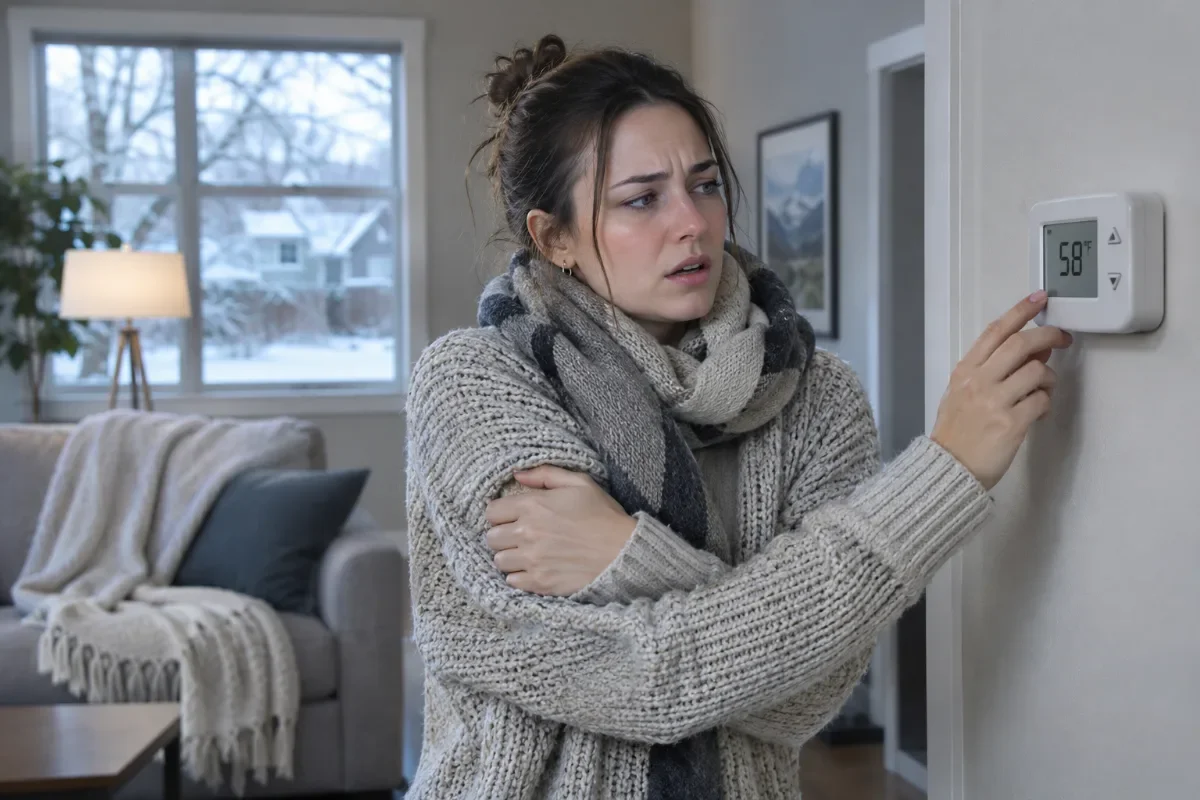
If you are a renter and the heat stops working
Treat this as a documentation problem first and a legal problem second. In order:
- Check the basics. Thermostat batteries and mode, the furnace switch, the breaker, a clogged filter, and whether the gas or electric service is on in your name.
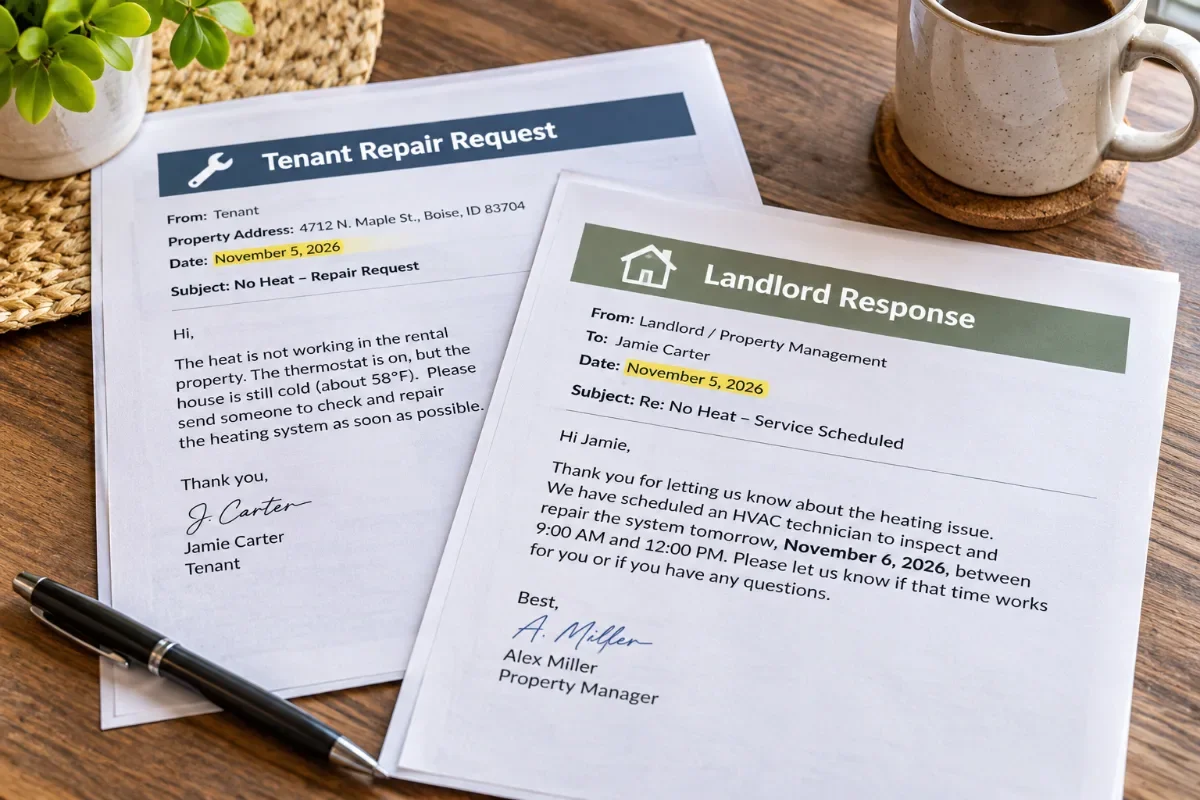
- Report it in writing the same day. Use email, the portal, or a text, and say plainly that you have no heat and what the temperature is inside. Keep a copy. A phone call alone leaves no record.
- Give a reasonable window, then follow up. Note the date and time of each contact. If you have vulnerable household members, say so.
- Keep paying rent. Idaho law does not give tenants a general right to withhold rent over repairs. According to the City of Boise, tenants remain obligated to pay rent, and withholding gives the landlord a nonpayment case against you.
- Escalate formally if nothing happens. Section 6-320 requires a written notice to the landlord, listing each failure and demanding a cure. If an item is not cured within three days after service, the tenant may file suit. Service has to follow the methods in the statute, so many renters get help from Idaho Legal Aid Services before sending it.
- Protect yourself while you wait. If it is dangerously cold, find a safe place to stay for the night rather than risk your health, and keep receipts for any reasonable costs. Never run a gas oven or a charcoal grill indoors for heat.
Your property manager's page of resident resources is also the right place to find how to submit a maintenance request in the first place.
Skipping rent to force a repair usually backfires in Idaho. A three-day nonpayment notice is much faster than a repair case, and an eviction filing follows you. Document, escalate in writing, and get advice before doing anything that risks a default.
If you are an owner and the call comes in
For owners, the risk is not the broken furnace. It is the slow response. A tenant who has served the three-day notice can file, and when the case asks only for specific performance (an order to fix it), section 6-320 directs the court to schedule trial within twelve days of filing. Separately, section 6-317 allows judgment for up to three times actual damages in an action under section 6-320, although the word in the statute is "may." The cheapest response is almost always the fast one.
A response plan that holds up:
- Triage no-heat as an emergency. Same-day response in freezing weather is a sensible internal target even though Idaho sets no deadline. The City of Boise's three-business-day figure is a ceiling, not a goal.
- Log everything. Date and time of the call, who took it, the dispatch, the vendor's invoice, and the confirmation that heat is restored.
- Offer a stopgap. If the repair needs a part, a safe temporary solution such as a rented unit or a hotel night shows good faith. Check the lease and local code before providing portable heaters, and never leave the tenant to improvise.
- Never turn off utilities or lock the tenant out. Idaho Legal Aid's guidance is clear that a landlord must go through written notice and the court process.
- Do not retaliate. Idaho Legal Aid also says an owner may not evict a tenant who pays on time in retaliation for asking for repairs, so treat repair requests as routine, not as complaints.
Prevention: the November checklist
Most no-heat emergencies are predictable. Before the first cold snap:
- Have the furnace or heat pump serviced and keep the invoice with the property file.
- Replace the filter and write the filter schedule into the lease, so tenants know who changes it.
- Test every thermostat, including batteries.
- Confirm the shutoff valves and the location of the breaker are labeled for the tenant.
- Give tenants a one-page note with the after-hours repair number.
- Walk through the lease for any heating promise you cannot keep. Section 6-320 also reaches lease terms that materially affect health and safety, so do not write promises you cannot honor at 10 pm on a Sunday.
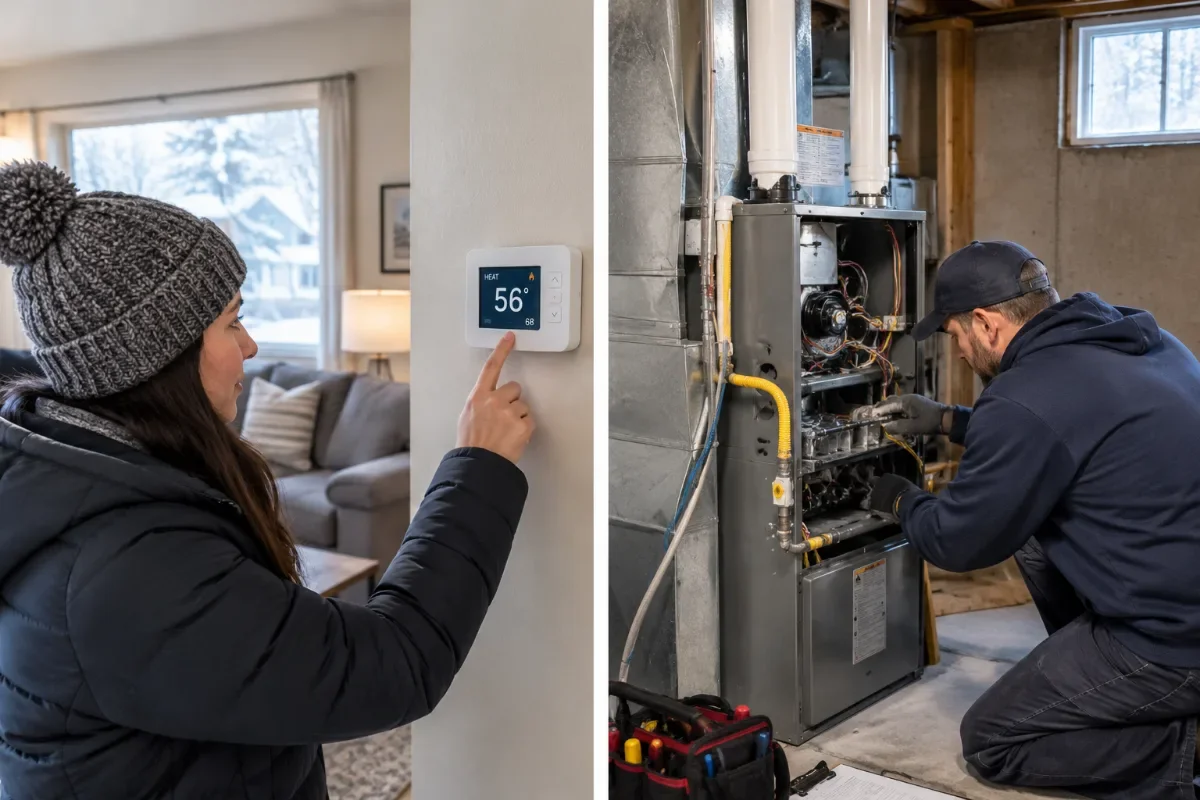
That is the work that proper property maintenance is supposed to do quietly in the background, so a no-heat call is rare and a fast fix is routine.
Quick reference
| Question | Idaho answer (as of October 28, 2026) |
|---|---|
| Fixed heat turn-on date? | None found |
| Minimum indoor temperature? | None found in state law or the city guidance we reviewed |
| Heating equipment duty? | Keep supplied heating facilities in good working order (section 6-320) |
| Tenant notice before suing? | Three days, in writing, listing each failure |
| Can a tenant withhold rent? | No general right to |
| Can a landlord shut off utilities to force a move? | No |
SmartMove PM manages single-family rentals across the Treasure Valley with documented maintenance intake, vendor scheduling and a clear record for every property. If you own a rental in the Boise area, request a free rental analysis and ask us how we handle heating season. Prefer to talk through your options first? Our team of Boise property management specialists is happy to help.
Frequently Asked Questions
When does a landlord have to turn on the heat in Idaho?
There is no calendar date. We did not find an Idaho statute or Boise renter rule that fixes a turn-on date or a minimum indoor temperature. What Idaho Code section 6-320 does say is that heating facilities the landlord supplies must be kept in good working order, so if the cold arrives and the furnace does not work, the clock is already running.
Is a landlord required to provide heat in Idaho?
If the rental came with a heating system the landlord supplies, yes, the landlord must keep it in good working order. Section 6-320 lists heating facilities among the prime things a tenant can sue over. Whether the owner or the tenant pays the gas or electric bill is a lease question.
What can I do if my landlord is not providing heat?
Put the problem in writing right away and keep a copy. If it is not fixed, Idaho law lets a tenant serve a written three-day notice listing the failure and demanding a cure. If the item is still not cured after three days, the tenant may file suit. Idaho does not allow a tenant to simply stop paying rent.
Can my landlord shut off the heat to make me move out?
No. Idaho Legal Aid's tenant guide says a landlord may not force a tenant out by shutting off utilities or changing the locks. An owner has to give proper written notice and go through the court process.
How fast does a landlord have to fix a broken furnace in Idaho?
Idaho Code sets no repair deadline. The City of Boise says a landlord has three business days to fix a violation of the city's Uniform Housing Code, and the three-day written notice in section 6-320 is the tenant's path to court. In practice, a no-heat call in freezing weather should be treated as same-day.
Does this apply outside Boise, in Meridian, Nampa or Eagle?
Section 6-320 is a statewide statute, so the heating rule applies across the Treasure Valley. Local code enforcement rules differ by city, so check with your own city if you need a code inspection.