⏱ 6 Minute Read
Last Updated: August 22, 2026
This article is general information for Treasure Valley rental owners and is not legal advice. Confirm notice periods and lease terms with a qualified Idaho professional before acting.
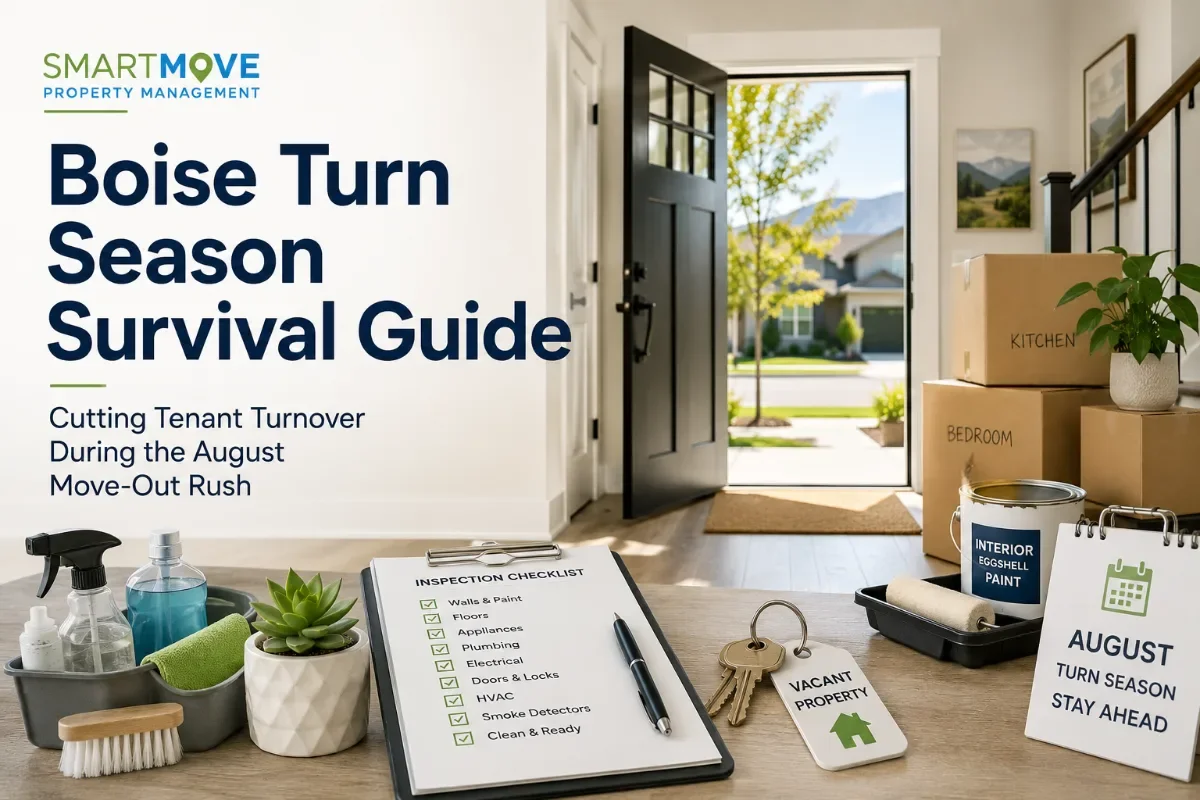
Ask any Boise landlord when their calendar gets loud, and the answer is the same: late summer. August is the peak of turn season across the Treasure Valley, when leases roll over fastest and every property manager in town is racing to get units cleaned, listed, and re-leased before the demand cools. Handle it well and you barely feel it. Handle it badly and you eat weeks of vacancy right when the market is hottest. This guide is a turn-season operations and retention playbook built for the August rush.
Why August is peak turn season in the Treasure Valley
Two things happen at once in Boise. First, a large share of local leases were signed the previous summer, so they naturally expire in July and August when tenants would rather move in good weather. Second, Boise State University's fall term pulls thousands of students, staff, and families into the area, and their arrival is timed to the Boise State University academic calendar. Add the families who deliberately move before the school year starts in Meridian, Eagle, Nampa, and Kuna, and you get a compressed window where move-outs and new demand peak together.
That concentration is a double-edged sword. Demand is high, so a rent-ready unit leases quickly. But every landlord is competing for the same cleaners, painters, and handymen, so the operators who planned ahead win and the ones who improvise sit vacant.
Every vacant day is rent you never get back. On a $1,800 rental, ten vacant days is roughly $600 gone, before you spend a dollar on make-ready. That single number is why speed matters more than almost anything else this time of year.
Start lease renewals 90 days out
The cheapest tenant to keep is the one you already have. Retention is the first and biggest lever in turn season, and it starts with timing. Send renewal offers about 90 days before the lease ends. That gives a staying resident room to commit early and gives you a three-month head start to market the unit if they decide to go.
Make the renewal easy to say yes to. A modest, market-aligned rent adjustment retains far more residents than a large surprise increase, because moving is expensive and stressful for tenants too. If you do raise rent, explain it briefly and back it with local comps so it reads as fair rather than opportunistic.
Build a fast make-ready workflow
When a resident does move out, the clock is everything. The landlords who lose the least money are the ones who treat the make-ready as an assembly line, scheduled before the outgoing tenant is even gone.
- Pre-schedule your vendors. Book cleaners, carpet crews, and painters as soon as you have notice, not after keys are returned.
- Inspect early. Do a pre-move-out walkthrough so you know what the unit needs and can order parts in advance.
- Batch the work. Cleaning, touch-up paint, and minor repairs should overlap, not happen one after another.
- Photograph and list day one. The moment the unit is presentable, get professional photos up and start showings.

A disciplined crew can turn a standard Boise unit in five to seven days. A disorganized one takes three weeks, and in turn season those extra two weeks are pure lost rent during the exact window when qualified renters are searching hardest.
Cut vacancy days by marketing before you are empty
You do not have to wait for a unit to be vacant to start filling it. Once you have a renewal decline or a move-out notice, begin pre-marketing immediately. List the upcoming availability, schedule showings around the make-ready, and build a short waitlist of pre-screened applicants so you can hand over keys the day the unit is ready.
This is where a strong local presence pays off. Owners who partner for Boise property management get their listings in front of the August demand surge early, so the transition from one tenant to the next has little or no gap.
Reduce turnover before it starts
The best turn season is a quiet one, and quiet comes from year-round retention habits:
- Respond to maintenance fast. Slow repairs are the number-one reason good tenants leave.
- Communicate like a professional. Residents who feel respected renew more often.
- Reward reliability. Small gestures at renewal, a minor upgrade or a fair rate, buy loyalty cheaply.
If you do not know your annual turnover percentage, you cannot manage it. Owners who watch this number, unit by unit, catch retention problems early and walk into August with fewer vacancies to fill.
What professional management changes
Turn season rewards logistics, and logistics is exactly what a full-service manager brings: standing vendor relationships, a repeatable make-ready checklist, early renewal outreach, and a marketing engine already pointed at the August surge. That is the difference between a five-day turn and a three-week one across a whole portfolio. If you are weighing the cost against the vacancy days it saves, our management pricing and owner FAQ lay out exactly what is included.
Frequently Asked Questions
Turn season and tenant retention questions Treasure Valley owners ask most.
Two forces collide in August. Summer leases signed the prior year tend to expire in the warm months when tenants prefer to move, and Boise State University's fall move-in draws thousands of renters into the Treasure Valley at the same time. That concentrates both move-outs and new demand into a few weeks, making August the peak turn season for Boise landlords.
Turnover is one of the largest hidden costs in rental ownership. Between lost rent during vacancy, make-ready repairs and cleaning, marketing, and screening, a single turnover often costs the equivalent of one to two months of rent or more. Every vacant day is rent you never recover, which is why cutting vacancy days is the highest-leverage move in turn season.
Start 90 days before the lease ends. In Idaho, a good practice is to send a renewal offer well ahead of expiration so a resident who plans to stay can commit early and a resident who plans to leave gives you runway to market the unit. Waiting until the last month is what turns a renewal into a vacancy.
A make-ready is the cleaning, repair, and refresh work that gets a unit rent-ready between tenants. In a fast Boise turn season, the goal is a five-to-seven-day make-ready by lining up cleaners, painters, and maintenance before the outgoing tenant is even gone, so the unit is listed and showing within days, not weeks.
It can if the increase is out of step with the market. Modest, well-explained adjustments that stay in line with Treasure Valley comps usually retain good tenants, because moving is expensive and disruptive for them too. A large surprise increase, on the other hand, pushes reliable residents to shop around.